Is hemp as strong as steel? So say researchers who studied replacing steel in concrete buildings with hemp-based rebar.
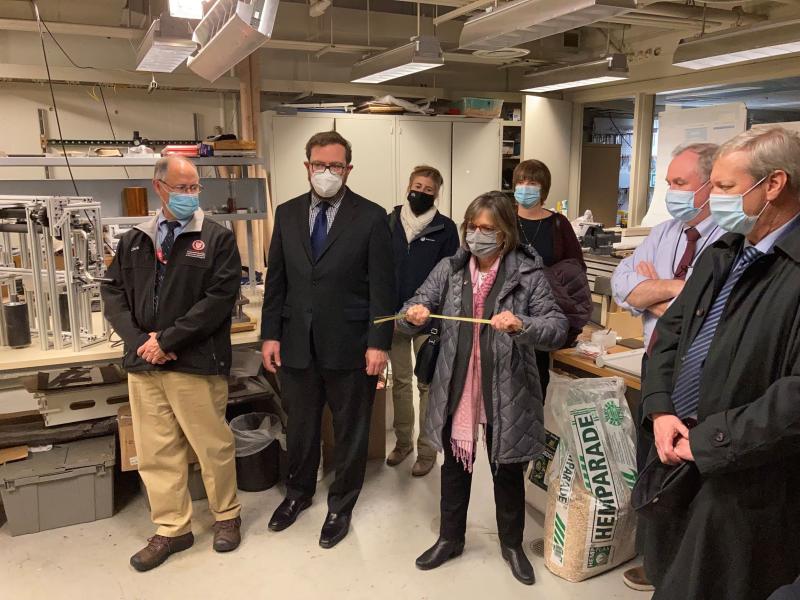
“Rensselaer is pleased to be a partner in this exciting effort to develop and commercialize hemp as an industrial product,” said Robert Hull, Rensselaer acting vice president for research. “Rensselaer is home to world-class researchers and platforms focused on driving discovery and innovation in advanced manufacturing and the built environment. Rensselaer President Dr. Shirley Ann Jackson announced at President Biden’s virtual climate summit the creation of our Institute for Energy, the Built Environment, and Smart Systems, or EBESS. A major focus of this new Institute will be to create new processes and products that drive decarbonization of the construction industry, in this case by helping to incorporate industrial hemp into New York’s built infrastructure.”
The use of hemp composites has the potential to reduce the carbon footprint of the built environment. Rensselaer researchers, including Alexandros Tsamis, assistant professor of architecture and associate director of the Center for Architecture Science and Ecology (CASE), and Dan Walczyk, professor of mechanical engineering and director of the Manufacturing Innovation Center (MIC), presented an overview of agricultural/horticultural, processing, and manufacturing aspects of going from hemp plant to construction products.
The building and construction industries have embraced the environmental benefits of both hemp fiber and hurd. However, there are technical hurdles that need to be overcome, including the lack of effective stalk processing methods and equipment that does not damage the fiber, lack of material property data, lack of manufacturing methods and, crucially, lack of higher value end-products for the construction industry.