Zev Paiss, COO Abraham Paiss & Associates (left) moderates a panel on “Hemp Skyscrapers” discussing hemp in construction at the Southern Hemp Expo on August 19th in Nashville, TN.
Panelists included from right to left: Greg Wilson the CEO of HempWood, Ana Konapitskaya an architect and founder of Coexist, and Jacob Waddell (holding microphone) the Executive Director of the U.S. Hemp Building Association.
Panelists from right to left: Zev Paiss, Chief Operating Officer, Abraham Paiss & Associates, Greg Wilson the CEO of HempWood, Ana Konapitskaya, architect and founder of Coexist, and Jacob Waddell (holding microphone) the Executive Director of the U.S. Hemp Building Association.
Researchers at a private university in the USA recently announced that they were developing a hemp rebar product that could replace steel rebar in construction projects. The hemp rebar, which has not yet been tested in the field, could represent a low-cost alternative to steel with lower maintenance and fewer decommissioning requirements.
Image Credit: 24K-Production/Shutterstock.com
The Need for a Non Corrosive Alternative for Steel Rebar
The hemp rebar product is currently in development. Engineers at the Rensselaer Polytechnic Institute, a private university in the US, claim that it will reduce carbon emissions from building projects (over their lifecycle) due to a lower maintenance requirement than steel rebar.
The team intends to publish a research paper detailing the invention in 2023.
hemp rebar
Currently, rust occurring in steel rebar is a significant cause of decay for steel reinforced concrete structures like bridges, roads, sea walls, and buildings. In areas with a high concentration of salt in the atmosphere (near or on the ocean), concrete structures only last for 40 to 50 years. This is due to the higher rate of corrosion caused by salt interacting with reinforcing steel.
But if it were not for corrosion in steel rebar, these structures could be expected to stay in place for three times as long, said the Rensselaer researchers.
Despite the relatively low amount of embodied energy in traditional steel rebar as a bought item, costs soon add up after installation – both environmental and financial.
In highly corrosive environments, structural designs often rely on alternatives like glass fiber reinforced polymer (GFRP) rebar instead of steel. While glass fiber and polymer do not corrode in the same way as steel, they are much more expensive and create more carbon emissions across their life cycle.
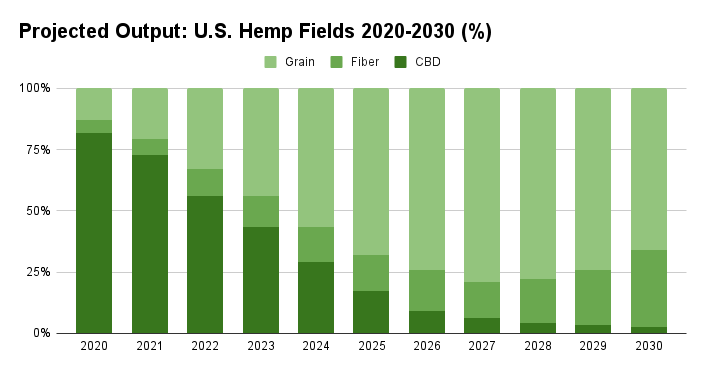
Despite the cloud that has descended over U.S. Hemp, a dwindled number of hearty survivors are sticking around, turning their attention to the promise of fiber in the textiles, construction, bioplastics and other industries, and grain for food and seed-oil-based personal care products.
But opportunities in those sectors don’t offer nearly the get-rich-quick promise of CBD that led to a massive oversupply of hemp flowers – and failure for many market participants – over the last three years.
The hard truth is that hemp is certain to be on a slow-growth path over the next decade, languishing under “specialty crop” status (think fruits and vegetables, tree nuts, tulips!). Investment will be hard to come by, and the competition from vested interests across the whole industrial spectrum will be difficult to challenge.
Still, considering the myriad opportunities of the plant to usher in a more healthy, climate-friendly world, the proven benefits of hemp are hard to ignore in the long term.
Build with it!
From a macro point of view, hemp’s greatest potential going forward is in construction, the 12th-biggest industrial sector in the USA, and the second biggest worldwide.
Amid the growing emphasis on everything “green,” hemp fiber is the perfect raw material for sustainable – and healthy – buildings.
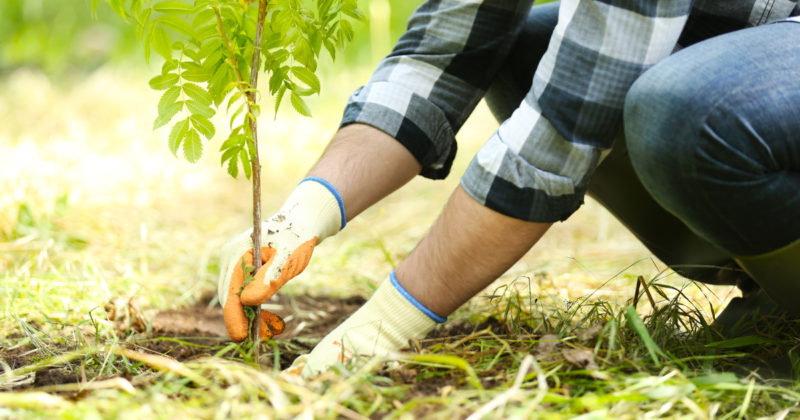
July 26 (UPI) — The Biden administration has unveiled plans to plant more than 1 billion trees over millions of acres of national forests in an effort to address a reforestation backlog caused by wildfires and to fight climate change.
The strategy was unveiled by the Department of Agriculture on Monday with funds made available under President Joe Biden‘s $1.2 trillion Bipartisan Infrastructure Law and its Repairing Existing Public Land by Adding Necessary Trees Act, better known as the REPLANT Act, which were signed into being in November of last year.
The REPLANT Act provides the Forest Service with funds to plant more than 1 billion trees over the next decade and to address 4 million acres of reforestation needs on National Forest Services lands.
According to the Forest Services, a majority of the 4 million acres in need of reforestation were burned by wildfires over the past few years. However, the service said it has only been able to annually address 6% of post-wildfire planting needs, creating the backlog.
The Forest Services has said it sees the urgency to increase reforestation, with Agriculture Secretary Tom Vilsack stating Monday that forests “are a powerful tool in the fight against climate change.”
Hempcrete failed to surpass petrochemical-based foams in insulation performance but can still be a viable replacement for traditional construction materials in sustainable “net-zero” buildings, experiments carried out at Kansas State University have found.
Graduate students in a first-of-its-kind seminar led by Michael Gibson, a professor in the university’s Department of Architecture, looked at the use of hempcrete in floors, walls, ceilings and roofs.
“There is a steep learning curve with this material,” said Gibson. “In the end, we learned that hempcrete is a great material with a lot of immediate potential for use in Kansas, especially with industrial hemp farming growing so quickly,” Gibson said.
Net-zero buildings produce enough energy on-site to meet or exceed their total energy consumption and eliminate greenhouse gas emissions.
Researchers at Rensselaer Polytechnic Institute have developed hemp-based rebar for concrete construction projects that should both last longer and carry a smaller carbon footprint than steel rebar.
Researchers at Rensselaer Polytechnic Institute (RPI) in New York have developed hemp-derived rebar that the team says is more resistant to corrosion and produces a significantly smaller carbon footprint than rebar made from steel, according to a Dezeen report.
The hemp rebar consists of intertwined natural hemp fiber that has been encased in thermoplastic — the result is a strong, highly durable, and corrosion-resistant reinforcement for cement-based construction projects.
Alexandros Tsamis, assistant professor of architecture and associate director of RPI’s Center for Architecture Science and Ecology, said in the report that concrete structures “in environments with high salt concentration” have an expected lifetime of “40-50 years” due to the corrosion of steel-based rebar.
“If the rebar was not corroding, it would be three times that much, and that would create a significant overall contribution to cutting carbon emissions, because you have three times more service life for every single thing you make.”
There has been a great deal of interest in hemp as a renewable source of fiber. But conventional processing uses toxic chemicals and results in a lot of waste. What if hemp could be sustainably processed? By using the entire plant and reducing waste materials the post-processing can be more environmental while helping to save trees. Sound too good to be true? 9Fiber doesn’t think so!
Zev has been a consultant to 9Fiber for the past several years assisting with Colorado efforts to scale their technology as well as identifying sources of raw material to be used in their facility near Detroit.
Zev Paiss, COO at Abraham Paiss and Associates was recently interviewed by Rebecca Spain with the Hemp Foundation. He spoke about his background, how he first got involved with hemp, the current status of the industry, and opportunities for those looking to get involved
As a veteran of the industrial hemp industry, Zev has become one of the most respected and skilled thought leaders in the space. He works closely with individuals, businesses, organizations to help educate them on many aspects of this emerging industry.
Hemp was lauded as a climate smart commodity for its use as a construction material by U.S. Agriculture Secretary Tom Vilsack this week as he highlighted new funding opportunities for farmers.
Agriculture Secretary Vilsack
Speaking at a university in Missouri, Vilsack pointed to hemp Monday when he announced that the U.S. Department of Agriculture will invest $1 billion in climate-smart commodities.
The new Partnerships for Climate-Smart Commodities fund will go to farmers, ranchers and forest landowners who use climate-smart practices, Vilsack said.
“For far too long in rural America, we’ve taken products of the land and from the land, we’ve shipped them someplace else, where opportunity is created someplace else, where wealth is created someplace else,” Vilsack said.
The USDA defines a climate-smart commodity as a commodity crop produced using practices that reduce greenhouse gas emissions or sequester carbon.
The USDA’s Commodity Credit Corporation will be used to fund pilot projects to provide incentives to:
Implement climate-smart production practices, activities and systems on working lands.
Measure or quantify, monitor and verify the carbon and greenhouse-gas benefits associated with those practices.
Develop markets and promote the resulting climate-smart commodities.
Applications will be taken in two groups, sorted by the size of the proposals. Deadlines are:
April 8 for the first funding pool (proposals from $5 million to $100 million).
May 27 for the second funding pool (proposals from $250,000 to $4,999,999).
With this acknowledgment from Secretary Vilsack hemp can gain strength as climate smart commodity to be incorporated into a wide variety of products.